
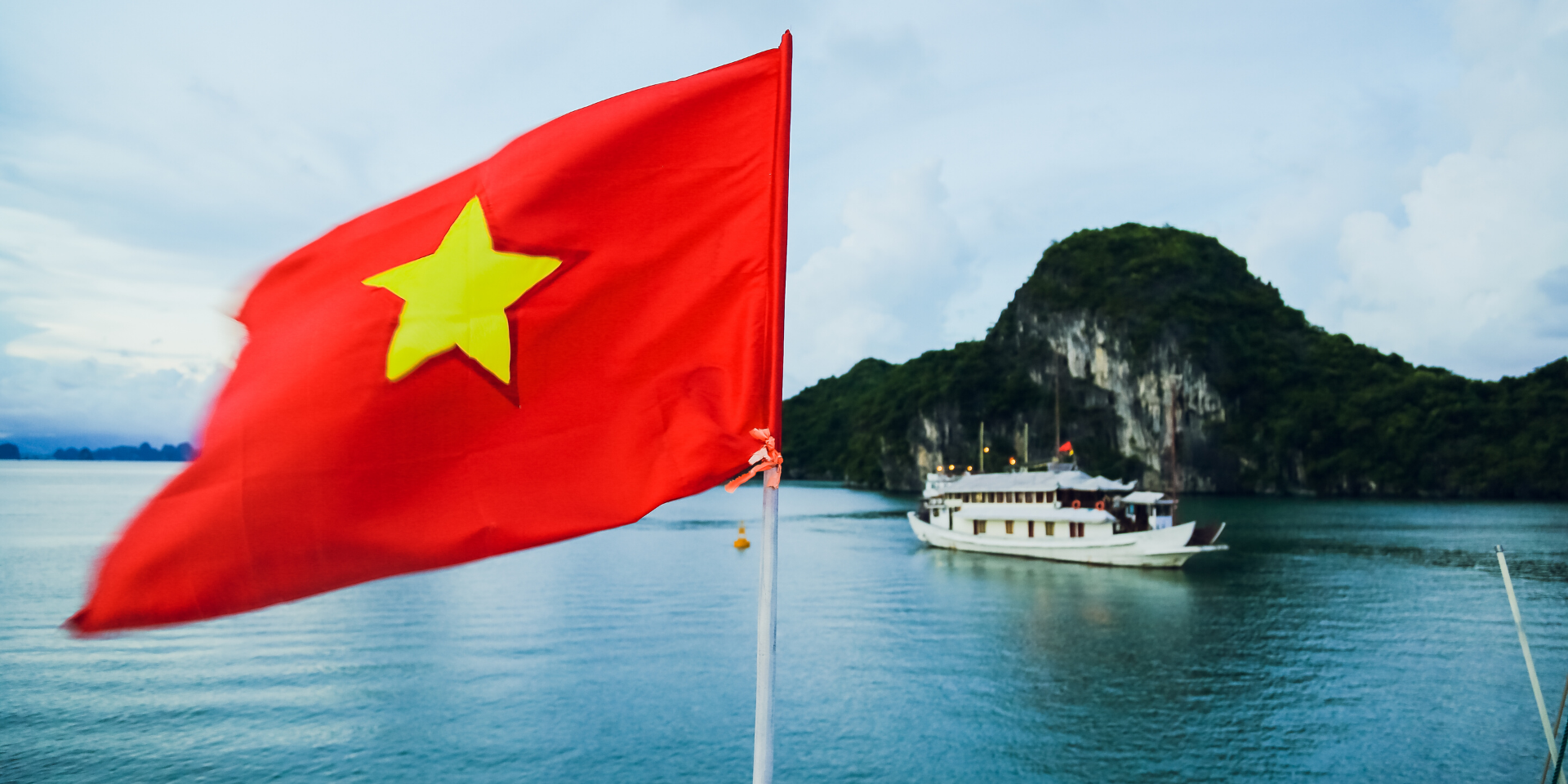
 South China Sea Oil and Gas: What an Assertive China Means for Maritime Operators" loading="eager">
For any operator running tankers, offshore supply vessels or survey ships through the South China Sea, the energy dispute between China and its neighbours is no longer a diplomatic abstraction. It now shapes day to day risk. Coast guard standoffs, militia swarming, water cannon, ramming and the harassment of drilling and survey work have moved from rare headlines to a recurring operating condition across one of the world's busiest sea lanes. A substantial share of global seaborne trade, on the order of a fifth to a quarter, passes through these waters, and more than 30 per cent of the world's seaborne crude oil moves through the sea, much of it bound for North Asia through the same chokepoints. When Beijing presses its claims around contested hydrocarbon blocks, the friction lands directly on commercial shipping, charter schedules and crew safety.
What the dispute actually is
The South China Sea contains substantial proven and prospective reserves of oil and natural gas, concentrated around the continental shelves of Vietnam, Malaysia, Brunei, the Philippines and Indonesia's Natuna region. China claims sovereignty over the great majority of the sea through its so called nine dash line, a boundary that overlaps the exclusive economic zones, the two hundred nautical mile maritime areas, of every neighbouring coastal state.
In 2016 an arbitral tribunal constituted under the United Nations Convention on the Law of the Sea (UNCLOS) ruled that the nine dash line had no basis in international law and that China had violated the Philippines' sovereign rights. Beijing rejected the ruling and has continued to enforce its claim through presence rather than law. The result is a sea where legal title and physical control diverge sharply, and where energy resources sit underneath the gap.
Why it matters to a maritime operator
The commercial stakes are concrete. Offshore exploration and production in disputed blocks has repeatedly been disrupted, suspended or abandoned under Chinese pressure. Survey vessels have been shadowed and blocked. Drilling contracts have been cancelled mid programme. Each disruption ripples outward into vessel charters, project insurance and the predictability that operators depend on to price a voyage.
For shipping that is simply transiting, the principal exposure is not a single dramatic incident but cumulative uncertainty:
- Route friction: coast guard and maritime militia activity can force diversions, slow steaming or stand off waits near contested features.
- Identification and tracking risk: spoofing and gaps in automatic identification system (AIS) data complicate situational awareness in crowded, contested waters.
- Insurance and contractual exposure: rising tension feeds into war risk assessments and charter party clauses, with cost consequences even when no incident occurs.
- Crew welfare and detention risk: vessels operating near disputed blocks face boarding, questioning or detention by competing authorities.
The dynamics driving escalation
Three reinforcing trends explain why the picture has hardened rather than settled.
First, China has built and militarised artificial islands across the Spratly and Paracel groups, fitting them with runways, radar, missile systems and harbour facilities. These outposts extend the reach of Chinese coast guard and militia vessels deep into contested waters, allowing sustained presence far from the mainland.
Second, Beijing increasingly relies on grey zone tactics: actions deliberately pitched below the threshold of open conflict. The China Coast Guard and the maritime militia, a fleet of nominally civilian fishing vessels acting under state direction, conduct the harassment that a navy could not without provoking a military response. Water cannon, laser dazzling, blocking manoeuvres and deliberate collisions have all been documented, particularly around features such as Second Thomas Shoal and Scarborough Shoal.
Third, the affected states are responding. The Philippines has publicised confrontations to build international support, deepened defence ties with the United States and Japan, and pressed ahead with its own energy ambitions. Vietnam continues to develop fields within its claimed waters. This combination of a more assertive China and more resolute neighbours narrows the room for quiet de escalation.
The energy stakes in numbers
The contested resources and the trade that crosses them give the dispute its weight. The figures below set the commercial context.
| Factor | Significance |
|---|---|
| Share of global seaborne trade transiting the sea | On the order of a fifth to a quarter, and more than 30 per cent of seaborne crude oil, a critical artery for North Asian economies |
| Claimants with overlapping exclusive economic zones | China, Vietnam, the Philippines, Malaysia, Brunei, and Indonesia's Natuna area |
| Legal status of China's nine dash line | Rejected by the 2016 UNCLOS arbitral tribunal; enforced regardless |
| Primary enforcement instruments | China Coast Guard and state directed maritime militia |
What it means for operators
The practical takeaway is that risk in the South China Sea is now structural, not episodic. Operators should treat the energy dispute as a standing input to voyage planning rather than a one off check. That means understanding which specific features and blocks are flashpoints, tracking the pattern of recent confrontations rather than reacting to the latest headline, and building diversion and stand off contingencies into charter and routing decisions.
It also means distinguishing rhetoric from reality. Tension rises and falls, and not every diplomatic exchange translates into operational risk. The skill is reading the signal: which incidents indicate a hardening pattern near a transit route, and which are noise. Crews need clear guidance on how to respond to coast guard hails, boarding attempts or shadowing, and operators need confidence that the intelligence informing those decisions is verified rather than scraped from open social media.
Where Verihelm helps
This is precisely the kind of slow burning, geographically specific threat that rewards continuous, analyst verified intelligence over occasional reporting. Verihelm, Dryad Global's maritime intelligence platform, turns the flood of open source reporting, vessel tracking and incident data into structured, human verified assessments tied to the waters a vessel will actually transit. Rather than leaving a master to interpret a contested AIS picture or an unconfirmed social media claim, the platform delivers a clear read on what is happening around specific features and blocks, how the pattern is trending, and what it means for a given voyage. For operators weighing routes through contested energy waters, that verified picture is the difference between reacting to headlines and planning against reality. Explore how we cover contested waters across our regional and threat intelligence work.