
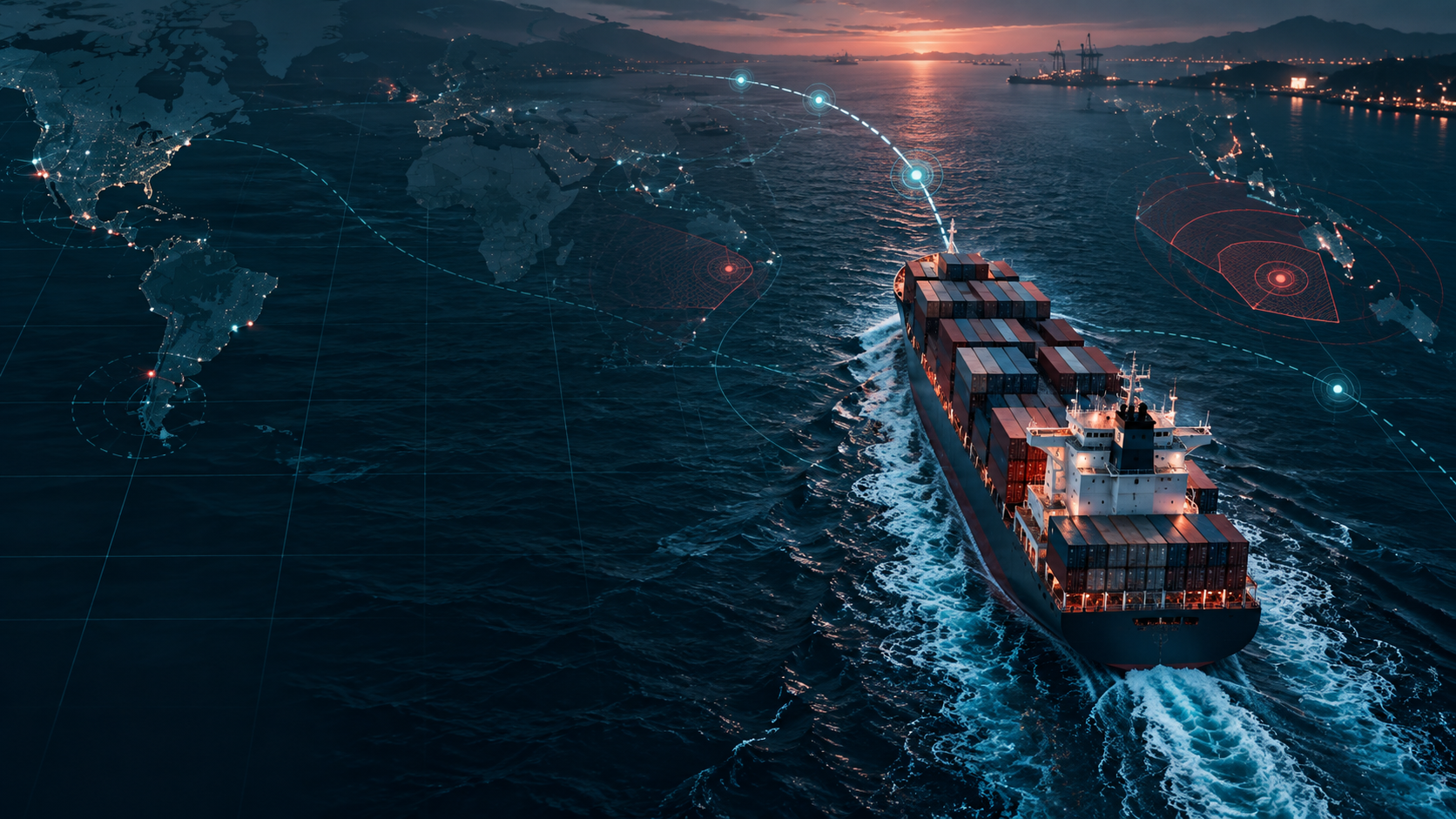
Marine insurers do not lack data. They lack a reliable way to turn a fast-changing mix of incidents, vessel characteristics, port conditions, regional threats and sanctions exposure into a decision they can explain and defend.
That is the role of maritime risk intelligence: not simply to report what has happened, but to show what is changing, why it matters to a particular risk and when an earlier assessment may no longer hold.
For underwriters and portfolio managers, this distinction is becoming more important. A vessel may look acceptable when considered in isolation, yet its exposure can change materially along the voyage. A port call may carry one set of risks on the day a policy is bound and another by the time the vessel arrives. Piracy, armed conflict, sanctions, navigation interference, cargo disruption and cyber incidents can also converge, creating consequences that no single feed captures adequately.
Verihelm, Dryad Global's maritime risk intelligence platform, brings those signals into one developing risk picture. It combines structured maritime information with analyst judgement, helping insurance teams assess voyages, ports, vessels and regional exposure while meaningful choices remain.
Why conventional risk inputs are no longer enough
Traditional marine insurance workflows often depend on a mixture of loss history, vessel data, static country ratings, war-risk lists, broker submissions, news and specialist alerts. Each input can be useful. The problem is that they are frequently reviewed separately, at different times and without a common analytical frame.
That fragmentation creates three practical underwriting challenges.
First, risk is dynamic. A route that was considered acceptable last month may now pass through an area affected by new threat activity, changing actor capability, navigation interference or additional reporting requirements.
Second, risk is contextual. An incident does not affect every vessel in the same way. Flag, type, age, freeboard, cargo, ownership, operator, destination and route can all change the relevance of the same event.
Third, risk is connected. The hyperlinked Metis Insights: Maritime Cyber Risk in 2026 report demonstrates how cyber and physical exposure increasingly overlap. GPS interference can increase collision or grounding risk. Malware affecting cargo or port systems can interrupt operations. Compromised communications can hinder response during an emergency. Cyber risk is therefore not a separate technical problem; it can multiply existing voyage, port and geopolitical exposure.
For insurers, the implication is clear: underwriting tools must connect the event to the insured exposure, not simply add another alert to the queue.
A practical maritime risk intelligence system for marine insurance
Verihelm is designed to support the questions that underwriters and portfolio managers actually need to answer:
- What has changed since this risk was last reviewed?
- Where does risk increase along the proposed voyage?
- Which ports, chokepoints or sea areas require closer examination?
- How do vessel characteristics affect the relevance of the threat?
- Is the vessel or counterparty exposed to current sanctions concerns?
- What evidence and reasoning support the assessment?
- When should the risk be reassessed?
The platform brings incidents, threat context, voyage and port risk, vessel information and sanctions screening into one place. Dryad Global's intelligence specialists test ambiguity, add context and challenge conclusions where the consequences demand judgement. Published assessments carry visible review status, helping users distinguish analyst-approved intelligence from unverified information.
This approach gives insurance teams a consistent route from signal to decision: see the change, understand the pattern, apply experienced judgement and carry the result into the underwriting file.
Stronger piracy risk modeling through context
Piracy risk modeling is most useful when it accounts for more than the coordinates of previous attacks. Historical frequency matters, but so do intent, capability, vessel vulnerability, local reporting, seasonal patterns, naval presence, route behaviour and changes in the wider security environment.
A cluster of incidents may represent opportunistic criminality, a developing campaign or unrelated events. The distinction can affect pricing, terms, referrals and loss-prevention advice. Analyst-verified intelligence helps underwriters avoid treating every incident as equal while still recognising early signals that may indicate a change in risk.
Verihelm's voyage and regional intelligence places incidents within this broader context. Per-leg analysis shows where exposure changes along a route and what is driving it, while vessel-specific factors help make the assessment relevant to the risk being considered.
Port risk analysis that looks beyond the terminal gate
A port call is not a single point on a map. Exposure can begin on the approach, continue through anchorage and cargo operations, and extend into the surrounding country and regional environment.
Effective port risk analysis should therefore consider:
- Recent incidents and changing local conditions
- Threat level and the reasoning behind it
- Security and reporting considerations
- War-risk and Joint War Committee context
- Country and ISPS context
- Disruption affecting access, cargo handling or onward movement
- Cyber or operational-technology issues that could affect port continuity
Verihelm Assess brings this information together around the port call. The result is a more complete view for underwriting, referral and claims preparation, with visible assessment status and reassessment timing.
From individual risks to portfolio management
The same intelligence that supports a single underwriting decision can reveal accumulation across a book.
Portfolio managers need to know where exposure is concentrating by route, port, threat area, flag, vessel class or counterparty. They also need to understand how a developing event could move across those concentrations. A change near a strategic chokepoint, for example, may affect several insured voyages, alter routing behaviour, raise additional war-risk questions and place pressure on nearby ports at the same time.
When teams work from disconnected reports, these relationships are difficult to see. A shared maritime risk intelligence system provides a consistent basis for comparing risks and escalating material change. Alerts, assessments, reports and data integrations can then carry the intelligence into the workflows used by underwriting, exposure management, compliance and claims teams.
This does not replace underwriter judgement. It gives that judgement a clearer, more current and more defensible evidence base.
Intelligence that remains human where it matters
Automation can collect and classify large volumes of information. It cannot reliably settle every question of relevance, credibility or consequence.
Maritime reporting is often incomplete. Sources may conflict. A change that appears minor in isolation may become significant when considered alongside actor capability, vessel behaviour or regional conditions. That is why Dryad Global combines technology with experienced maritime analysts.
The objective is not to produce more data. It is to identify the signals that could change the decision, explain the reasoning and show the limits of what is known. For marine insurance teams, that visible analytical process supports consistency across referrals and creates a stronger record of why a risk was accepted, declined, priced or reviewed.
Risk subscription services that match the way insurers work
Not every organisation needs to begin with a full enterprise deployment. Verihelm supports one-off voyage, port and regional assessments as well as continuing risk subscription services.
That allows insurers to start with the decision in front of them, then move to ongoing monitoring when they need broader history, more users, higher screening volumes, alerts, integrations or crisis support. The intelligence method remains consistent; access, usage and delivery options scale with the organisation.
See the change before it narrows the underwriting decision
Marine insurance has always depended on judgement under uncertainty. What has changed is the speed, volume and interconnected nature of the risk picture.
Underwriters need more than a list of incidents. Portfolio managers need more than a static heat map. Both need intelligence that connects emerging signals to the voyage, port, vessel and exposure they are responsible for.
Verihelm helps marine insurers see where risk is changing, understand what is driving it and retain the evidence behind the decision.
See Verihelm around your next underwriting decision.

or explore the maritime risk intelligence platform.