
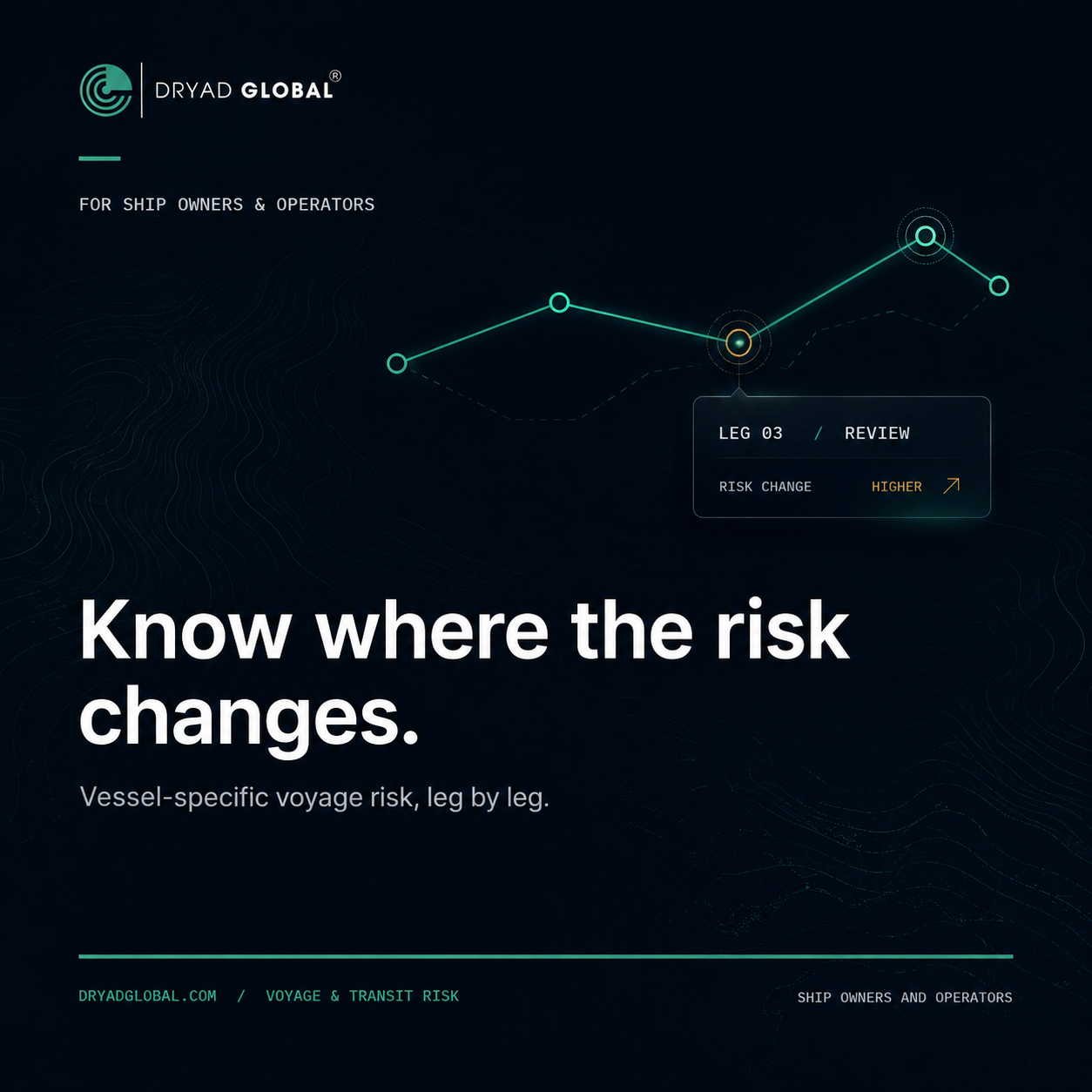
A transit risk assessment helps a ship owner understand where risk changes across a planned voyage, what is driving the change and when the route or operating plan may need review. Dryad Global assesses each leg using current incidents, threat areas, port conditions, vessel characteristics, weather and war-risk context.
Why does a voyage need more than a regional risk rating?
A voyage is not exposed to one constant level of risk. The route moves through ports, coastal waters, straits and open sea, and the threat picture can change at every waypoint. A broad regional rating can hide the leg that matters most. Dryad Global's Voyage and Transit Risk Assessment shows exposure across the full waypoint sequence, so elevated risk is not averaged away.
What makes the assessment vessel-specific?
The ship changes the exposure. Type, flag, age and freeboard can affect how a threat should be interpreted. The assessment therefore uses the vessel details supplied by the client rather than applying a generic market average. For owners and operators, this creates a more relevant basis for route review, voyage planning and escalation.
What should the shore team and Master receive?
The assessment combines security threats, sea state and seasonal factors with port-call context, JWC listed areas and Additional War Risk Premium considerations. It also states validity and reassessment triggers. The output is a shareable PDF with plain-English considerations and a crew briefing, framed as options to consider rather than instructions.
How does this support better operational decisions?
The value is not a score in isolation. It is a common risk picture for the owner, operator, Master, charterer and insurer. It helps teams identify where additional review is justified, what evidence supports that review and what change would invalidate the current assessment. That is particularly useful when the decision window is shorter than the organisation's normal reporting cycle.
Frequently asked questions
Is a transit risk assessment the same as a generic country report?
No. It follows the planned route leg by leg and adjusts the exposure to the vessel information supplied.
When should an assessment be refreshed?
Refresh it when a stated reassessment trigger occurs, such as a material route, threat, port, weather or vessel change.
What format does Dryad provide?
A shareable PDF designed to support review and crew briefing before the voyage.
Call to action. See where risk changes along your route. Request a Voyage and Transit Risk Assessment.