
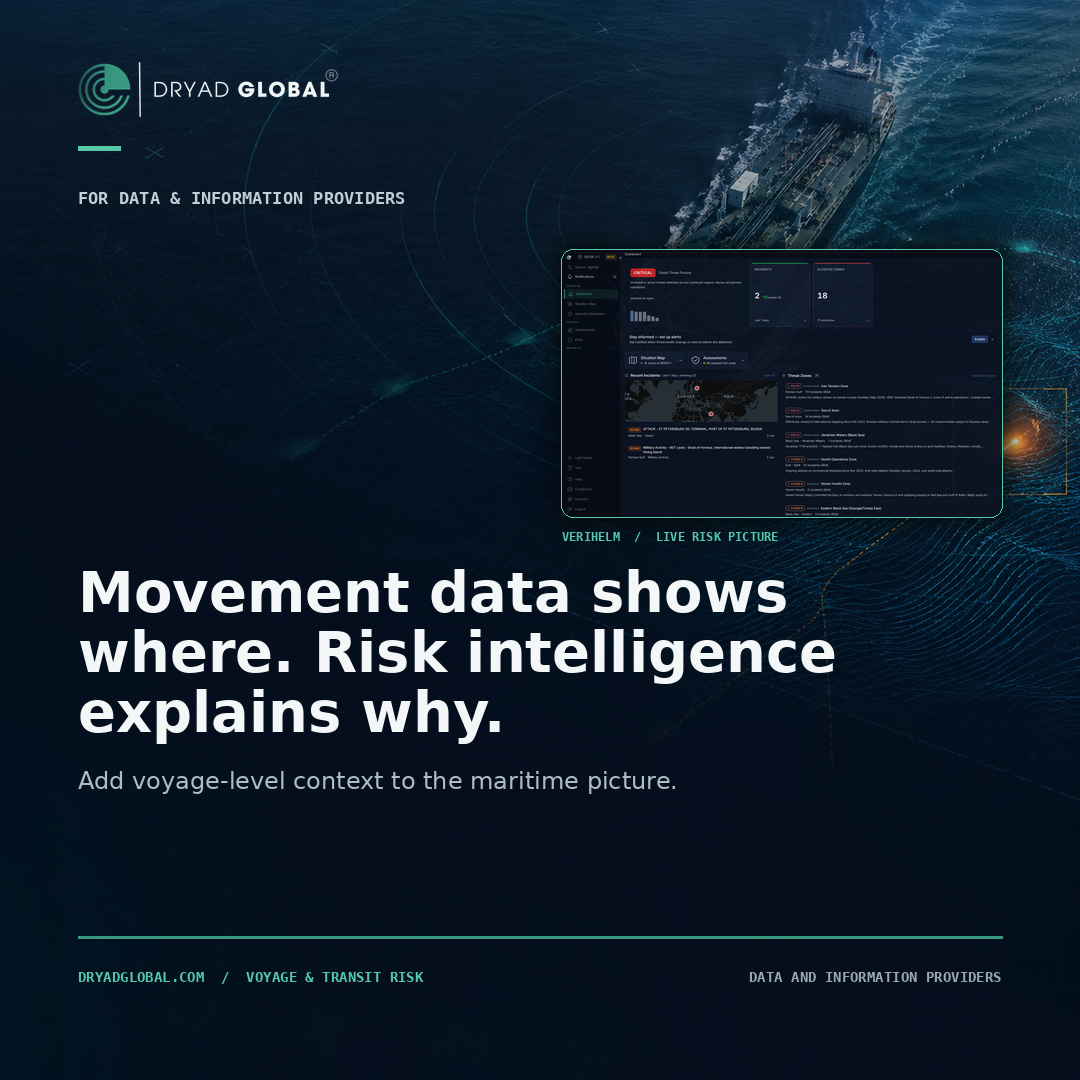
Voyage-level risk context helps maritime data providers move from reporting location or events to explaining decision relevance. A leg-by-leg assessment connects current incidents, threat areas, ports, vessel characteristics, weather and war-risk context, then states what is driving the result and what change would require reassessment.
What is missing from movement data alone?
AIS, port, weather and market data are valuable, but a user still has to decide which change matters to a specific voyage. More alerts can increase workload without increasing confidence. A voyage assessment organises multiple signals around the route, vessel and decision being considered.
How does Dryad turn information into voyage context?
Dryad evaluates every leg against current incidents, threat areas, actor capability, port conditions, vessel characteristics, weather and war-risk context. Human judgement is applied where the evidence or consequence requires it. The result explains where the risk changes and the reasons behind that change.
Why are validity and triggers important data fields?
A risk conclusion should carry its own refresh logic. The assessment states how long the view is valid and what could require another look. For information providers, that is a useful model for turning a static output into a governed decision input without claiming continuous certainty.
How can other providers use this campaign idea?
The opportunity is complementary. Movement, port, weather, market and compliance providers can help clients answer where, when and who. Voyage risk intelligence adds a structured answer to why the change matters for this route and this vessel. Any commercial use or integration would require a separate agreement with Dryad Global.
Frequently asked questions
Does Dryad replace AIS or vessel-tracking data?
No. Voyage risk assessment complements movement and other data with route-specific security and risk context.
What makes the output decision-relevant?
It ties signals to a waypoint sequence, vessel characteristics, identified drivers, validity and reassessment triggers.
Is an integration included?
No integration is implied. Any data or commercial integration would require a separate agreement with Dryad Global.
Call to action. See where risk changes along your route. Request a Voyage and Transit Risk Assessment.