
Reviewed: 22 August 2026
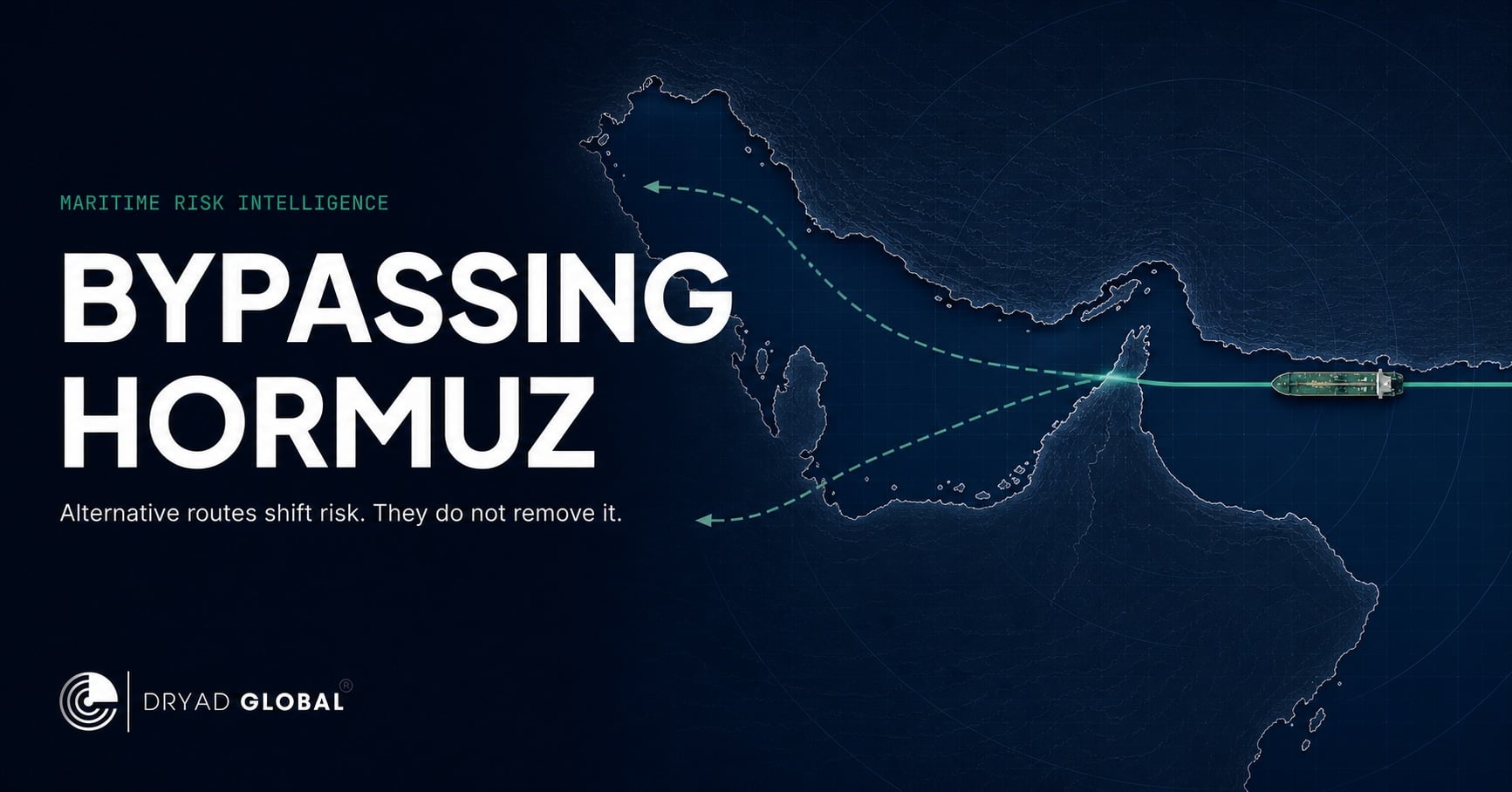
New pipelines can reduce dependence on the Strait of Hormuz, but they cannot replace its capacity quickly or isolate energy flows from the conflict around them.
Saudi Arabia's East-West pipeline moves crude towards the Red Sea, while the UAE can export through Fujairah. Proposed routes through Syria and Türkiye could also move some Iraqi production towards the Mediterranean. Each option avoids one chokepoint by introducing a different combination of infrastructure, security and political exposure.
A bypass changes the route. The risk moves with it.
A Bypass Is Not a Substitute
Around 20 to 25 million barrels per day of capacity would be needed to match the volumes associated with Hormuz, Dryad Global CEO Corey Ranslem told Al Majalla. Existing and proposed alternatives can relieve some pressure, but developing enough infrastructure to replace the strait would require significant time and investment.
The alternatives are also exposed to threats of their own. Moving more crude west through Saudi Arabia places greater weight on infrastructure leading to the Red Sea, where Houthi attacks and repeated changes in commercial traffic continue to shape routing decisions.
Dryad Global estimates that Red Sea vessel traffic fell by around 80 to 85% after the Houthi campaign began in November 2023. Some traffic later returned, but renewed attacks have continued to affect passage through Bab-el-Mandeb and the Red Sea.
Fujairah avoids Hormuz, but its location and infrastructure do not place it beyond regional conflict. Mediterranean routes through Syria or Türkiye introduce a different set of political relationships, security concerns and infrastructure constraints.
Disruption Does Not End at the Chokepoint
Restrictions around Hormuz affect more than the vessels attempting a transit. They change how much energy can reach international markets, where it can be stored, which infrastructure carries it and how quickly producers can respond.
Those changes can influence freight, insurance exposure, commodity pricing and confidence in future supply. A new route may reduce dependence on one passage while concentrating more value around another port, pipeline or terminal, creating a different point at which disruption could spread.
The relevant questions are therefore how much flow can be moved, how soon it can move and which risks emerge along the alternative route.
Different Routes Create Different Decisions
For a ship operator, changing the route alters the voyage and threat picture. An insurer or financier may instead be concerned with where exposure is concentrating, while a trader or supply-chain team may need to understand what the change means for volume, timing and the next vulnerable point in the flow.
Infrastructure redundancy matters because it creates options. It should not be mistaken for the removal of the underlying geopolitical risk.
Read the original Al Majalla analysis.
This article provides general information and analysis. It is not legal advice or a vessel-specific risk assessment.