
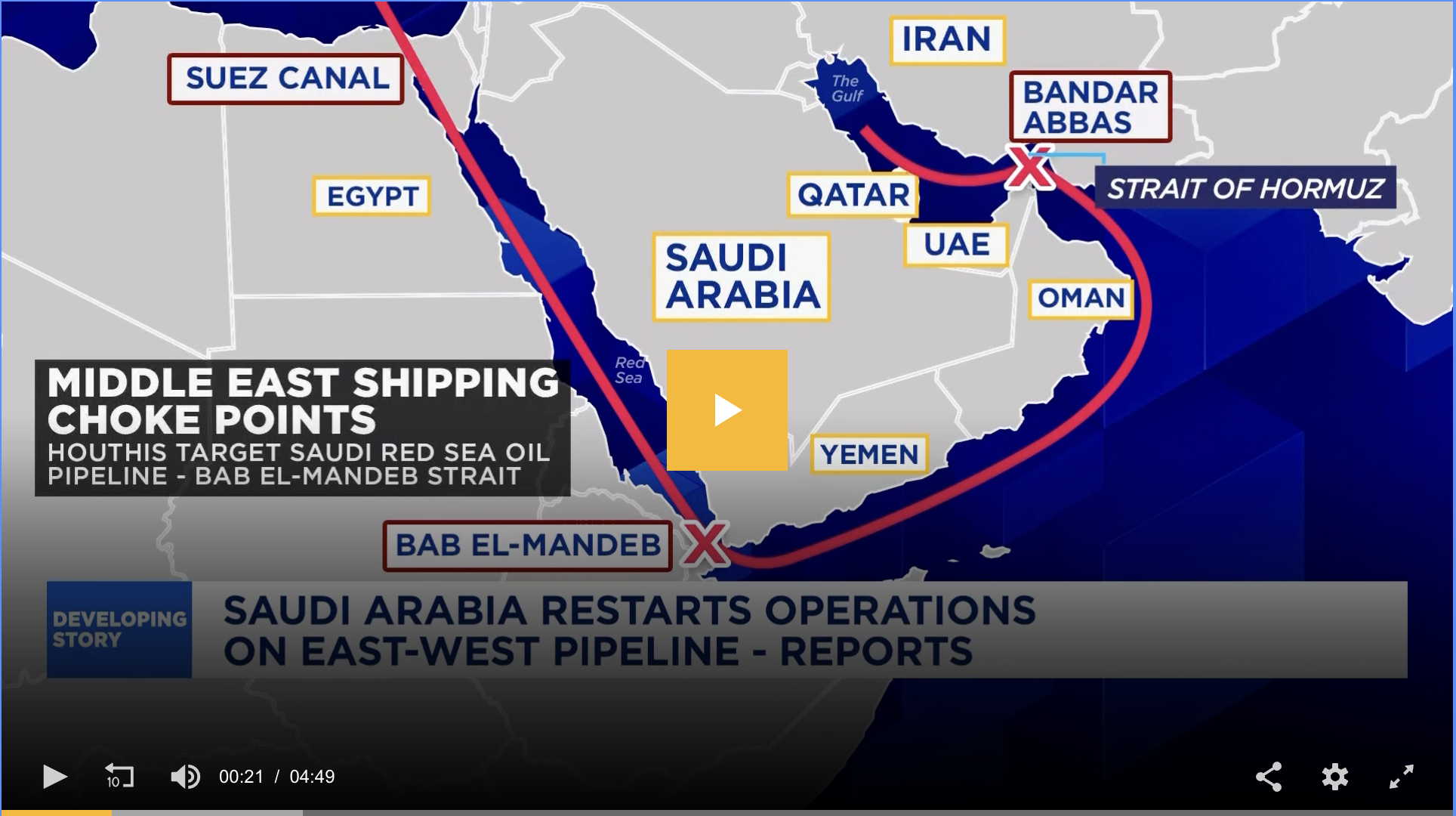
Saudi Arabia’s East–West pipeline is moving crude again after the September drone attacks. That is an important step for exports through the Red Sea, but a restarted pipeline and a dependable loading programme at Yanbu are different milestones.
In a CNBC interview, Dryad Global CEO Corey Ranslem addressed a recovery that could still take six to eight weeks. For shipowners, charterers, traders and insurers, the question is how much crude can move consistently during that period—and what security exposure accompanies each cargo.
Why could recovery take weeks?
Drone strikes forced a shutdown of the pipeline on 11 September and halted loadings at Yanbu. The line had been moving roughly 4 million barrels per day from Saudi Arabia’s eastern oilfields to the Red Sea, offering an alternative to exports through the Strait of Hormuz.
The pipeline restarted at a low rate on 22 September. Reuters reported that three pumping stations had sustained damage. One source estimated six to eight weeks for a full restart; another estimated up to six weeks. These are recovery estimates, not confirmed dates for sustained export volumes.
Early flows are expected to serve refineries on Saudi Arabia’s west coast. Yanbu exports may resume alongside those deliveries, but one tanker loading would not establish that the terminal can sustain its previous schedule. Operators need to watch whether loadings continue—and at what volumes—as pipeline rates rise. Dryad Global’s earlier assessment of the restart explains why repairs to the pumping stations matter.
What changes for vessels in the Red Sea?
More crude reaching Yanbu could bring more tankers back into the northern Red Sea and support onward movements via Egypt. Reuters reported that traders were positioning vessels near Port Said and Sidi Kerir in anticipation of Saudi cargoes. Vessel positioning shows commercial expectations; completed loadings and departures provide firmer evidence of restored flows.
The route has a security dimension beyond the pipeline. Industrial Info Resources, reporting on Ranslem’s CNBC appearance, said he put traffic through Bab al-Mandab at around 30 vessels a day, compared with an average of 80. Restoring an export outlet does not automatically restore confidence across the wider Red Sea route.
Exposure also depends on where a cargo goes next. A vessel sailing south through Bab al-Mandab faces a different threat picture from one moving north towards Egypt and the Mediterranean. Loading plans should therefore be assessed alongside destination, transit route, current incident reporting and the vessel’s own risk profile.
What should the market watch next?
Four indicators will show whether the restart is becoming a reliable export recovery:
- Sustained pipeline throughput: Can flows increase without further interruption as the damaged stations are repaired?
- Repeat Yanbu loadings: Are multiple tankers loading and departing, rather than a single cargo moving through a temporary arrangement?
- Vessel movements: Are operators returning to the Red Sea corridor, and which routes are they taking?
- The threat environment: Do attacks or credible warnings change the risk of port calls and onward transits?
The East–West pipeline remains a critical alternative while conflict disrupts Gulf shipping. Its restart creates an opportunity to recover exports. Its commercial value will be measured by sustained crude deliveries and repeatable loadings over the weeks ahead.
Watch Corey Ranslem’s CNBC interview and explore Dryad Global’s Verihelm platform for maritime risk intelligence.