
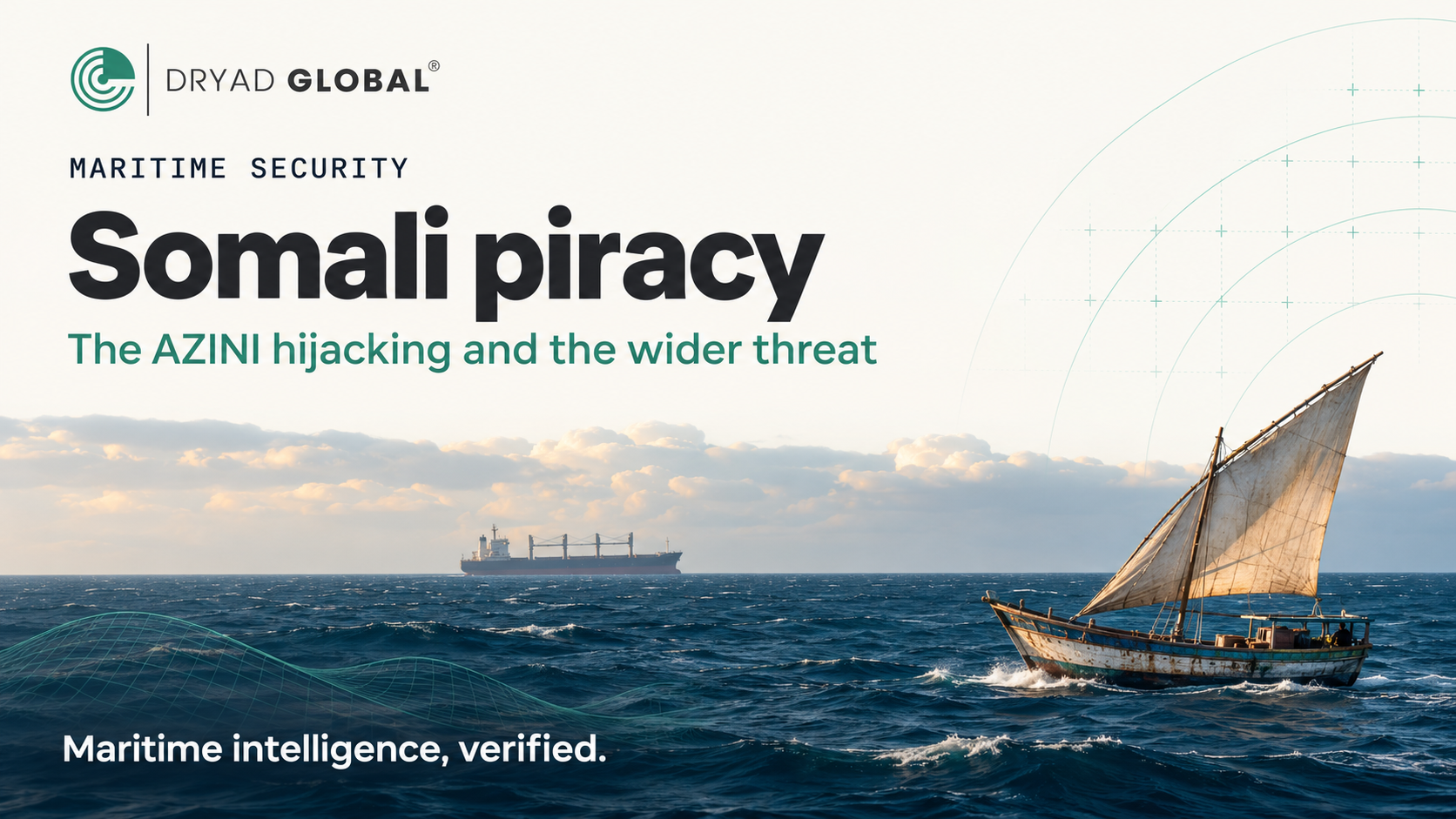
The liberation of the fishing vessel AZINI has closed one hijacking incident. Recent suspicious approaches underline why commercial vessels must remain alert across the Gulf of Aden and Somali Basin.
The hijacking of the Iran-flagged fishing vessel AZINI on 29 October 2026 brought renewed attention to the threat posed by Somali piracy—and the potential for captured fishing vessels to support attacks further offshore.
Indian forces subsequently secured the vessel, with MSCIO confirming its liberation on 2 November. While the immediate incident is closed, the wider operational concern remains: suspected pirate groups continue to demonstrate the intent and equipment to threaten regional shipping.
AZINI hijacking raised fears of mothership operations
AZINI was reportedly seized at approximately 09:00 UTC off Somalia’s northeastern coast. MSCIO later reported its position as 09°47'N, 055°45'E, approaching a maritime traffic lane, and warned that it could be used as a mothership for further piracy attacks.
A captured dhow can extend a pirate group’s operating range by carrying personnel, supplies and smaller attack craft. For commercial operators, the concern therefore extends beyond the hijacked vessel to the potential exposure of merchant shipping further offshore.
India’s Ministry of Defence said the rescue operation lasted more than 48 hours. A warship and maritime reconnaissance aircraft located and tracked AZINI, using non-kinetic measures to contain its movement. Marine Commandos, reinforced through an Indian Air Force C-17 airdrop, secured the vessel without casualties or injuries. The ministry reported that 20 crew members were rescued.
Early reporting had described 23 people aboard, including Iranian crew and Somali guards. That differs from the subsequent rescue figure; the available statements do not reconcile the discrepancy.
Suspicious approaches reinforce the regional concern
The hijacking occurred alongside two separate reports of suspicious activity in the Gulf of Aden.
On 28 October, MSCIO reported a suspected Pirate Action Group operating in a green-blue small craft with nine people aboard. The craft reportedly carried two ladders and a hook and was travelling south at approximately 10–18 knots. The equipment and reported activity warranted heightened vigilance, although the alert did not describe a confirmed attack.
On 30 October, a merchant vessel reported an approach by two suspicious craft. One was a greenish fast skiff carrying four people and reportedly fitted with a mounted machine gun. It closed to approximately 300 metres astern before withdrawing after the vessel’s armed security team displayed its weapons. No shots were fired and no boarding attempt was reported.
Taken together, these incidents support continued concern about suspected pirate activity. They do not establish that the same group was responsible for each event.
What this means for commercial shipping
Dryad Global’s assessment is that the end of the southwest monsoon has improved conditions for skiff operations further offshore. The recent incidents also sit within the broader increase in Pirate Action Group activity identified in our 2026 monitoring.
For owners, charterers and underwriters, AZINI’s release should inform the immediate threat picture without prompting a wider assumption that regional exposure has subsided.
Voyage planning should account for current incident locations, suspicious approaches and the potential use of captured vessels to support offshore operations. Bridge teams should maintain effective lookouts, rehearse reporting and response procedures, and apply vessel-specific protective measures. MSCIO’s alerts reiterate the need to follow BMP-MS and report suspicious activity promptly.
Dryad Global’s forthcoming analysis, Maritime disruption in the Gulf of Aden and Somali Basin, 2025–26: piracy resurgence and the Houthi–Al-Shabaab–IRGC nexus, will examine the drivers behind the resurgence and the implications for maritime stakeholders.
Understand your exposure before your next transit. Contact Dryad Global for maritime threat intelligence, voyage risk assessment and security support.