
Reviewed: 22 August 2026
Assessment current at 23 July 2026
This assessment reflects conditions on 23 July 2026. The position can change quickly. Check Verihelm for the latest approved assessment.
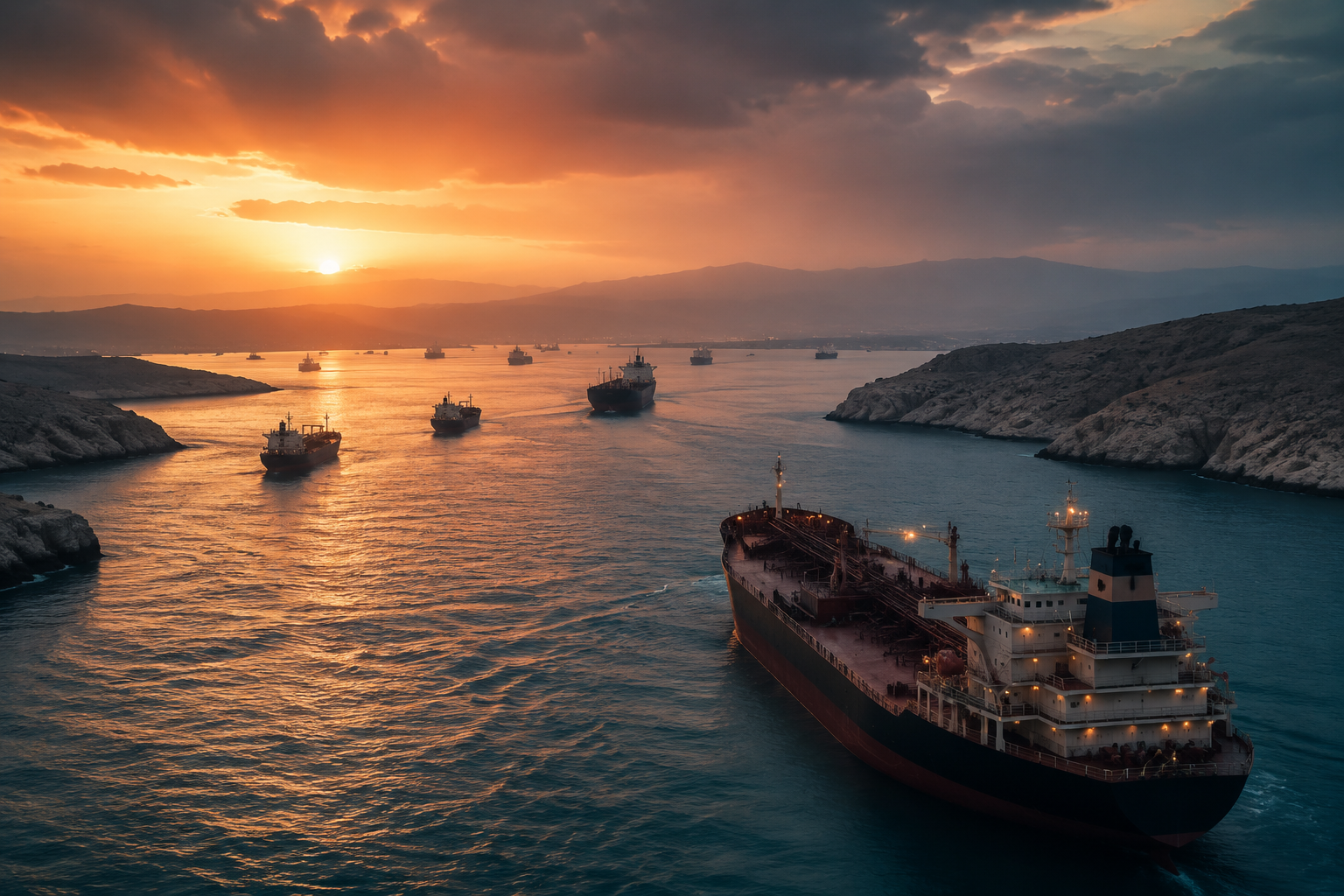
Vessels are moving through the Strait of Hormuz, but normal commercial confidence has not returned. Visible AIS traffic remains well below pre-war levels, war-risk premiums are high and operators continue to delay, reconsider or selectively proceed with transits.
The strait is not closed, yet it is not functioning as a routine commercial passage. That distinction is more useful than the binary question of whether the waterway is open.
Open Does Not Mean Normal
The mid-June agreement between the United States and Iran produced a brief recovery in commercial traffic. Daily transits increased from extremely low levels, although they remained below the pre-war range of approximately 120 to 140 vessels per day, and that recovery has since narrowed.
Renewed incidents, US retaliatory action and measures affecting Iranian-linked shipping have weakened confidence again. Dryad Global estimates that approximately 30 to 40 vessels are now transiting each day, including movements that are not visible through AIS.
This is selective movement rather than a broad return to normal trade. Operators are reaching different conclusions about the same passage because the exposure and commercial consequences are not the same for every vessel.
Each Vessel Faces a Different Decision
Some vessels are waiting outside the most exposed areas while owners, charterers, insurers and flag states consider whether passage remains acceptable. Others continue where delay or diversion carries the greater commercial cost.
Cargo, ownership, flag, insurance terms, charterparty obligations and perceived affiliation can all alter the decision. A transit considered possible for one vessel may remain unacceptable for another, even when both face the same regional reporting.
Some vessels are also transiting without broadcasting AIS. That reduces public visibility, but it introduces safety, regulatory and compliance questions in congested or contested waters. A gap in the visible traffic should not therefore be treated as proof that no vessels are moving.
The decision turns on whether a particular vessel, cargo and exposure can make the passage under the conditions that apply at the time, not simply on whether another ship has passed through.
Energy Carriers Carry More of the Exposure
Crude tankers and LNG carriers remain at the centre of the risk picture because their cargoes are tied directly to global energy supply. An incident involving a large tanker or LNG carrier could affect markets, insurance and government decisions without physically closing the strait.
Their size and operating profile also constrain their options in narrow, congested or militarised waters. Other commercial vessels remain exposed, but energy carriers combine that physical exposure with greater strategic and economic consequence.
Alternative routes offer only partial relief. Pipelines can move some crude away from Hormuz, but they cannot replace the passage for every producer or cargo. LNG is harder to redirect because the export and receiving infrastructure exists in fixed locations.
The Decision Is Bigger Than a Transit Fee
Iran's contested proposal for transit fees has attracted attention, but Dryad Global does not assess it as the main reason operators are holding back. The more immediate questions concern physical threat, crew safety, insurance cover, charterparty exposure, flag-state advice, naval activity and legal uncertainty.
For most organisations, the issue is not whether another fee can be added to the voyage cost. It is whether the passage can be completed safely and lawfully with acceptable insurance. The proposal adds uncertainty, but it does not define the decision.
What Could Change This Assessment?
On 23 July 2026, Dryad Global assesses the strait as open but severely constrained. Traffic continues at reduced and irregular levels, commercial confidence remains weak and energy carriers face the greatest combination of exposure and consequence.
Further attack or military action could change that view, as could a shift in US or Iranian posture, new flag-state or naval guidance, a significant movement in war-risk cover, a diplomatic agreement or a sustained change in commercial traffic.
The important signal is not whether the strait can still be described as open. It is whether conditions have changed enough for a particular organisation to move, wait or reconsider the passage.
For the enduring forces that make this chokepoint consequential, see Strait of Hormuz and the Gulf: Where Maritime Risk Can Disrupt the Flow.
This article provides general information and analysis. It is not legal advice or a vessel-specific risk assessment.