
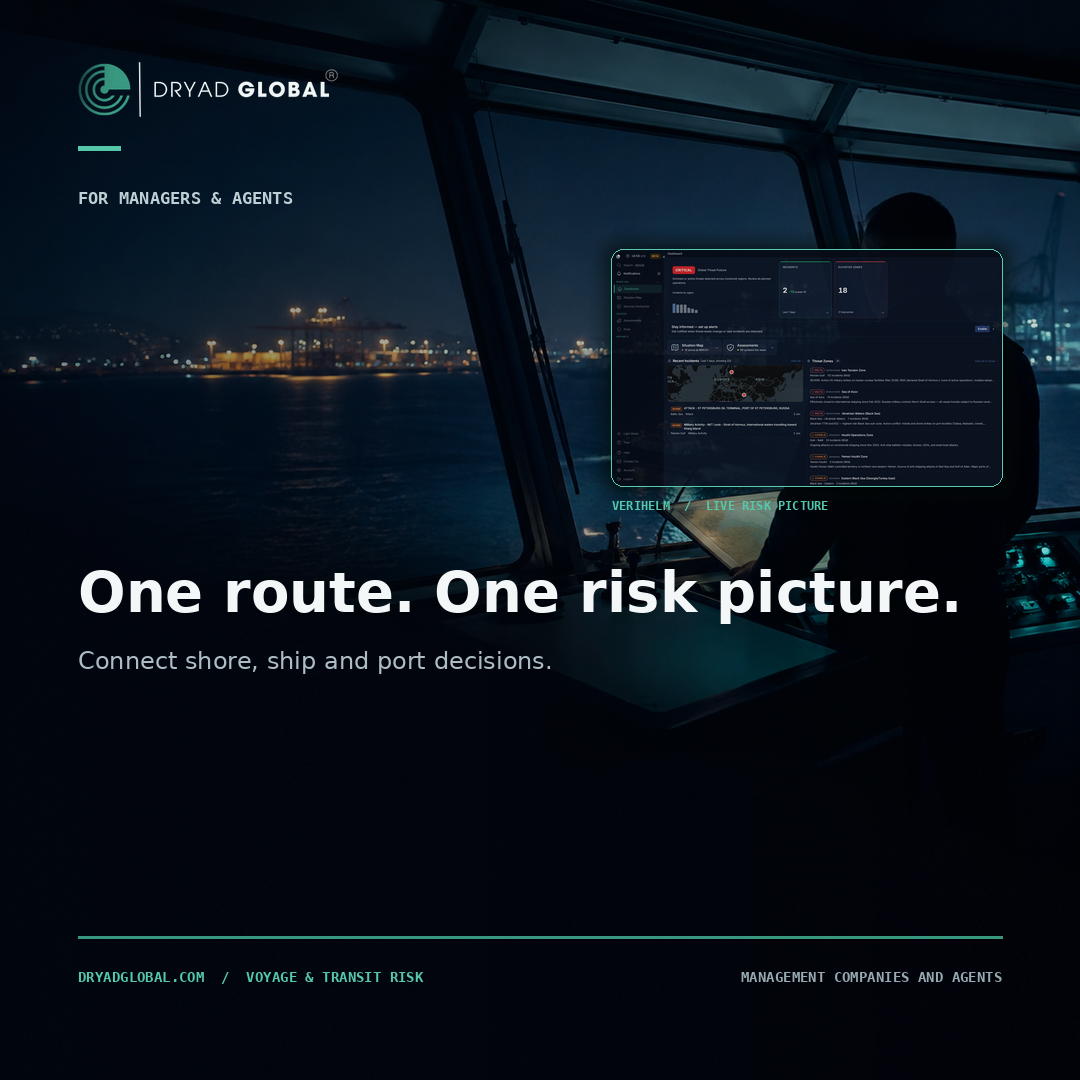
Ship managers and agents use transit risk assessments to align shore teams, the Master and port stakeholders around one current view of a voyage. A leg-by-leg assessment identifies where exposure changes, adds relevant port-call context and records the validity and triggers that would require the plan to be reviewed.
Why do management companies need a shared voyage picture?
Technical, marine, security and operations teams often hold different parts of the same decision. The Master needs a brief that is usable on board. The shore team needs evidence and an escalation record. The agent needs clarity on port and local context. A route-level assessment creates a common reference point without pretending that every stakeholder has the same responsibility.
How does port context change a transit assessment?
Departure, arrival and intermediate calls can alter exposure, timing and available options. Dryad includes context from published port assessments where available and connects that information to the wider waypoint sequence. This helps managers distinguish a voyage-wide concern from a risk concentrated around a specific call or leg.
What improves handover and crew briefing?
A useful assessment states what it covers, how long it remains valid and what would require another look. Dryad's output includes plain-English considerations and a crew briefing, delivered as a shareable PDF. Managers can therefore circulate one controlled version and use the reassessment triggers to govern updates.
Where do agents add value?
Agents can help verify local operating conditions, port constraints and changes that emerge close to arrival. The assessment does not replace that local role. It gives the agent's information a clear place in the wider voyage decision and helps the management company identify which change is material enough to escalate.
Frequently asked questions
Can one assessment support both shore and ship teams?
Yes. The PDF is designed to be shareable and includes plain-English considerations and a crew briefing.
Does the assessment include port calls?
It includes published port-assessment context for departure, arrival and intermediate calls where available.
Does it replace local agent advice?
No. It complements current local information and provides a route-level framework for interpreting it.
Call to action. See where risk changes along your route. Request a Voyage and Transit Risk Assessment.