
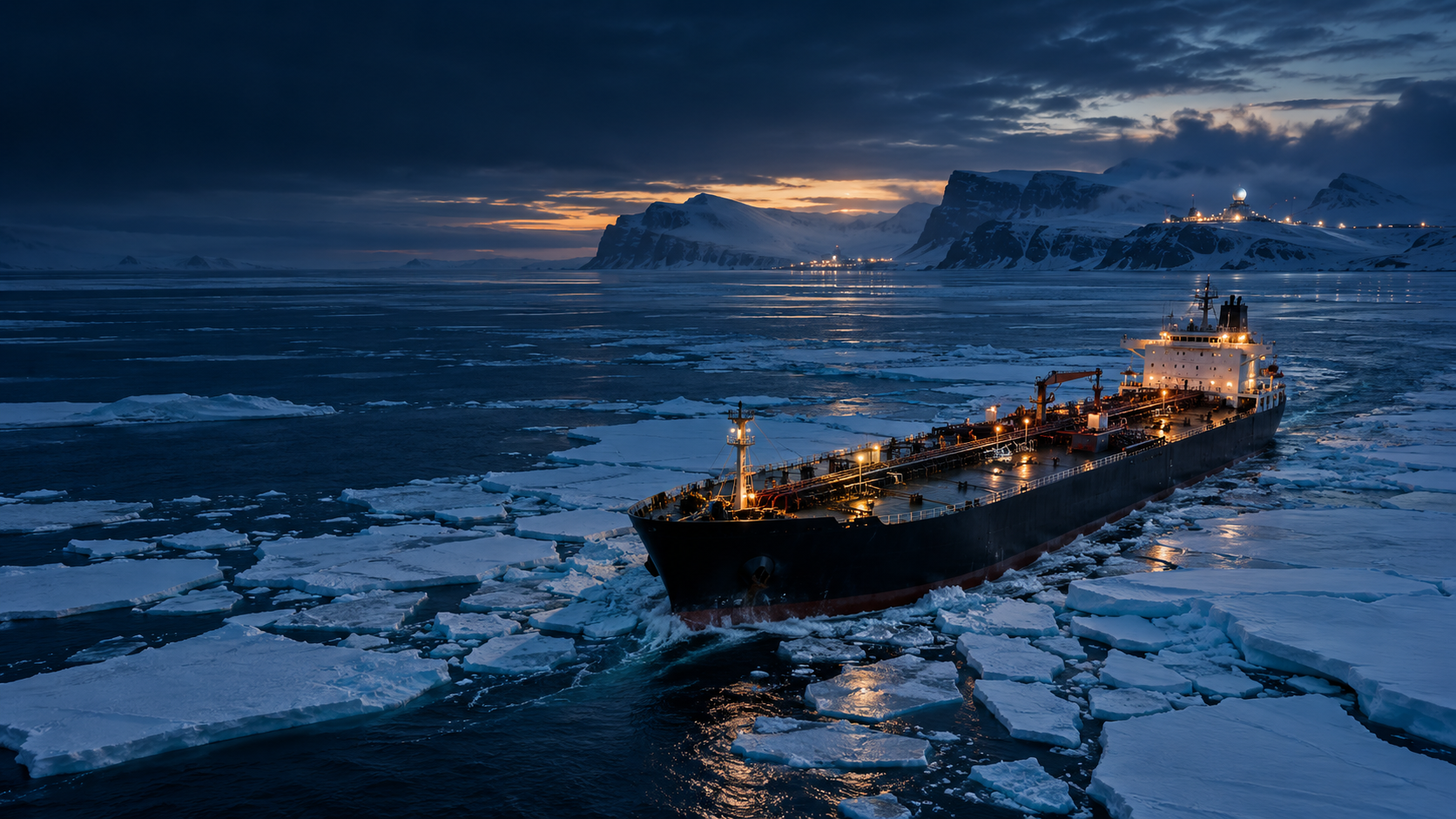
Russia’s Northern Sea Route is carrying more oil and LNG traffic, while a new Greenland security agreement points to a stronger allied presence in the North Atlantic. For commercial operators, these developments create distinct risks that need to be assessed across the full voyage.
The Arctic shipping picture is changing fastest in energy transport. Bellona’s monitoring recorded 50 shadow-fleet oil tankers and 18 shadow-fleet LNG carriers on Russia’s Northern Sea Route (NSR) by mid-September 2026. That exceeds its totals for the whole of 2025: 38 and 13 respectively. Around three-quarters of all oil tankers observed on the route during the period, and nearly 40 percent of LNG carriers, were under sanctions.
The increase does not make the NSR a routine alternative for every type of cargo. Container traffic remains limited, while ice conditions, vessel capability and access to emergency support continue to shape what can move safely. Bellona reported that several lower ice-class tankers encountered difficult conditions this season, adding substantial distance and delays to their passages. It also noted that the NSR administration no longer publishes incident and accident notices, reducing public visibility into events on the route.
Energy trade is a major driver. Russian oil and LNG shipments are moving toward Asian buyers, and the EU’s full prohibition on Russian LNG imports from the beginning of 2027 adds pressure to reassess future markets and routes. For charterers, insurers and counterparties, the questions extend beyond distance and transit time: vessel condition, ice class, ownership, sanctions exposure, insurance and the ability to respond to an incident all matter.
Greenland’s security agreement changes the western Arctic picture
On 22 September, Greenland, Denmark and the United States signed an agreement updating their longstanding defence arrangements. It allows the United States to modernise and expand activities at Pituffik Space Base and identifies Narsarsuaq and Mestersvig as locations for additional defence areas. The details of those areas still require mutual agreement, and the wider agreement will enter into force after the necessary parliamentary procedures.
The text also provides for US military movement between defence areas, aircraft access and undersea movement by US public vessels in Greenland’s territorial waters. It supports stronger NATO planning, presence, exercises and intelligence gathering in the Arctic. These provisions signal a longer-term change in allied posture, although the scale and timing of any new activity will depend on implementation.
Greenland’s position matters to shipping through the Denmark Strait, the Greenland–Iceland–United Kingdom (GIUK) gap and the approaches to the North Atlantic. Greater surveillance and military activity may improve awareness of vessel movements in these waters. It does not, by itself, establish new commercial navigation restrictions or mean that vessels on Russia’s NSR will be monitored or intercepted from Greenland.
What commercial operators should watch
The immediate task is to assess each voyage on its own route and evidence. Operators planning Arctic or North Atlantic passages should:
- Check vessel ice capability, condition, insurance and emergency response arrangements against the intended route and season.
- Screen vessels, owners, managers, cargoes and counterparties for sanctions exposure, including changes during a voyage.
- Monitor ice information, navigational warnings and any future notices affecting approaches to Greenlandic facilities.
- Allow for changes in surveillance, exercises or local operating arrangements as the Greenland agreement is implemented.
- Treat gaps in incident reporting or vessel documentation as a reason for closer review.
The NSR’s expanding energy traffic and Greenland’s evolving defence posture are separate developments. Together, they reinforce a broader point: Arctic voyage planning now depends on a clear view of physical conditions, vessel suitability, sanctions exposure and security activity from origin to destination.
Planning an Arctic or North Atlantic voyage? Request a Dryad Global voyage and transit risk assessment.