
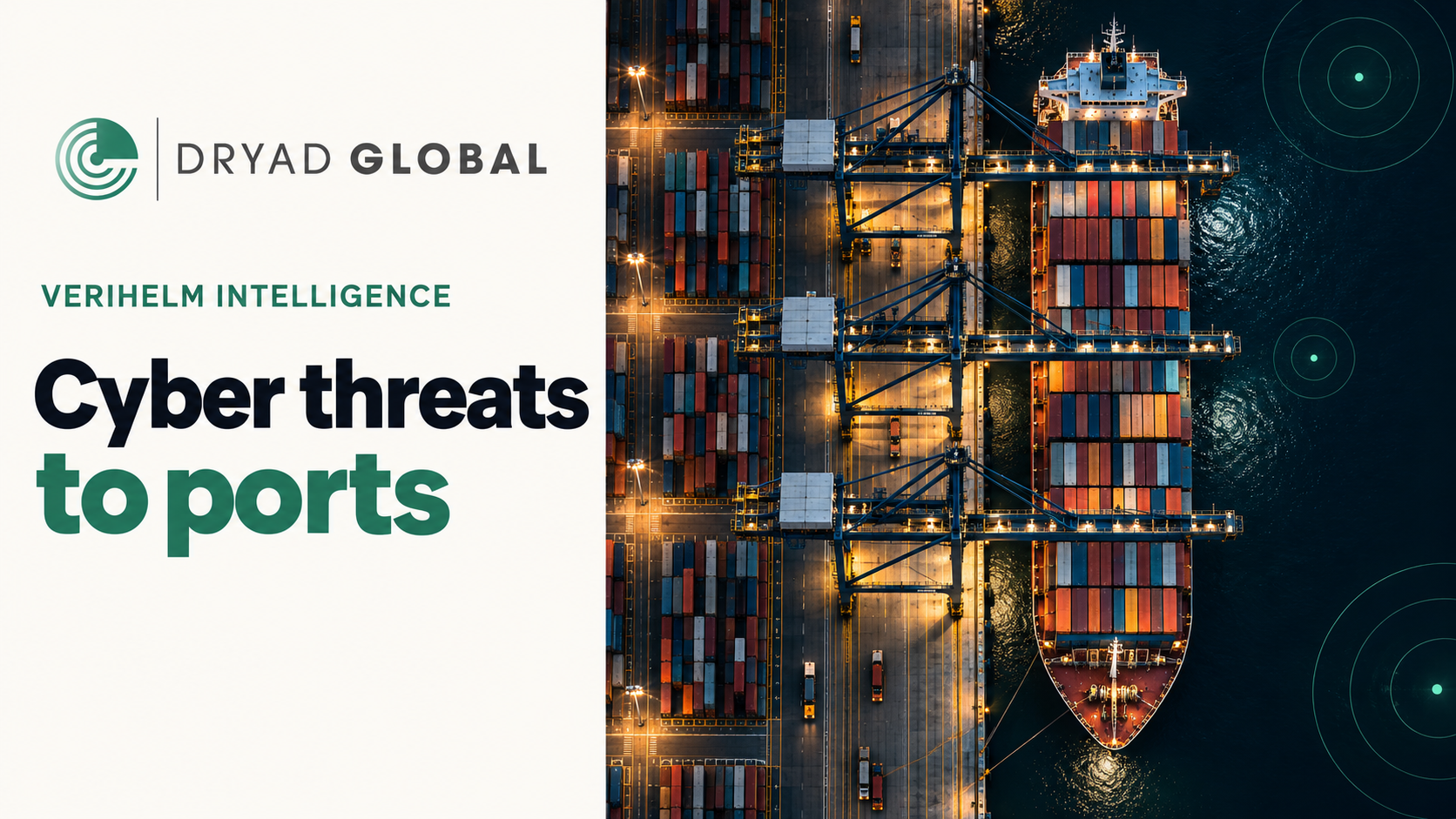
When North Carolina Ports suffered a cyberattack in August 2026, Wilmington delayed opening and switched to manual gate processing. The incident also disrupted operations at Morehead City and the Charlotte Inland Port. A cyber incident had become a landside logistics problem, affecting when trucks could move through the gate and how quickly cargo could get on its way.
What the 2026 figures tell us
An open-source maritime cybersecurity dataset recorded 1,397 events by 15 October 2026, already above the 1,352 recorded for all of 2025. The dataset tracks a range of publicly reported events, so its totals reflect reporting activity as well as underlying threats. They cannot establish how many attacks succeeded.
Individual operators offer a different view of the pressure. The Port of Los Angeles reported blocking more than 120 million attempted attacks in August, including attempts to harvest credentials and deploy malware. In November, Maersk disclosed that data had been extracted from a local legacy system acquired through an earlier acquisition. At the time of disclosure, Maersk said it expected no disruption to customer operations and that booking and shipment management remained available.
How AI is changing the response window
Google Threat Intelligence Group observed an average of 18 vulnerabilities exploited per month from January to August 2026, up from 10.5 per month in 2025. The research covers software across industries. Google identified AI-assisted analysis as one possible factor in how quickly attackers can act on disclosed flaws. For ports, vessel operators and their suppliers, the practical question is which vulnerabilities affect exposed systems that operations depend on and need attention first.
Where a cyber incident becomes a supply-chain risk
A terminal’s outage can affect organisations whose own systems are still working. Manual gate processing can slow truck collections. A disruption to a shared booking or cargo platform can leave carriers, terminals and shippers working from different information. The operational impact depends on which services are affected, how long the disruption lasts and whether there is a workable fallback.
For operators and supply-chain teams, three questions belong in contingency planning.
- Which ports, terminals and service providers are critical to the voyage or cargo movement?
- Which operations can continue manually, and at what capacity?
- What change in conditions would trigger a revised port call, delivery schedule or customer update?
Book a Verihelm demo to see how Dryad Global brings emerging incidents, port and terminal risk, and voyage assessments together for the trade lanes your team manages. Bring a route or port exposure you’re actively assessing, and we’ll tailor the conversation around it. Book a Verihelm demo